

Fresh herbs are the cheapest upgrade to home cooking and the most annoying thing to buy: a bunch for one recipe, the rest liquefying in the fridge. Growing a few pots solves it, as long as you pick the ones that tolerate a kitchen.
Why the supermarket pot dies
That pot is not one plant. It is dozens of seedlings crammed together and pushed hard in a greenhouse to look lush on the shelf. Their roots are competing, the compost is exhausted, and the plant is essentially at the end of a sprint.
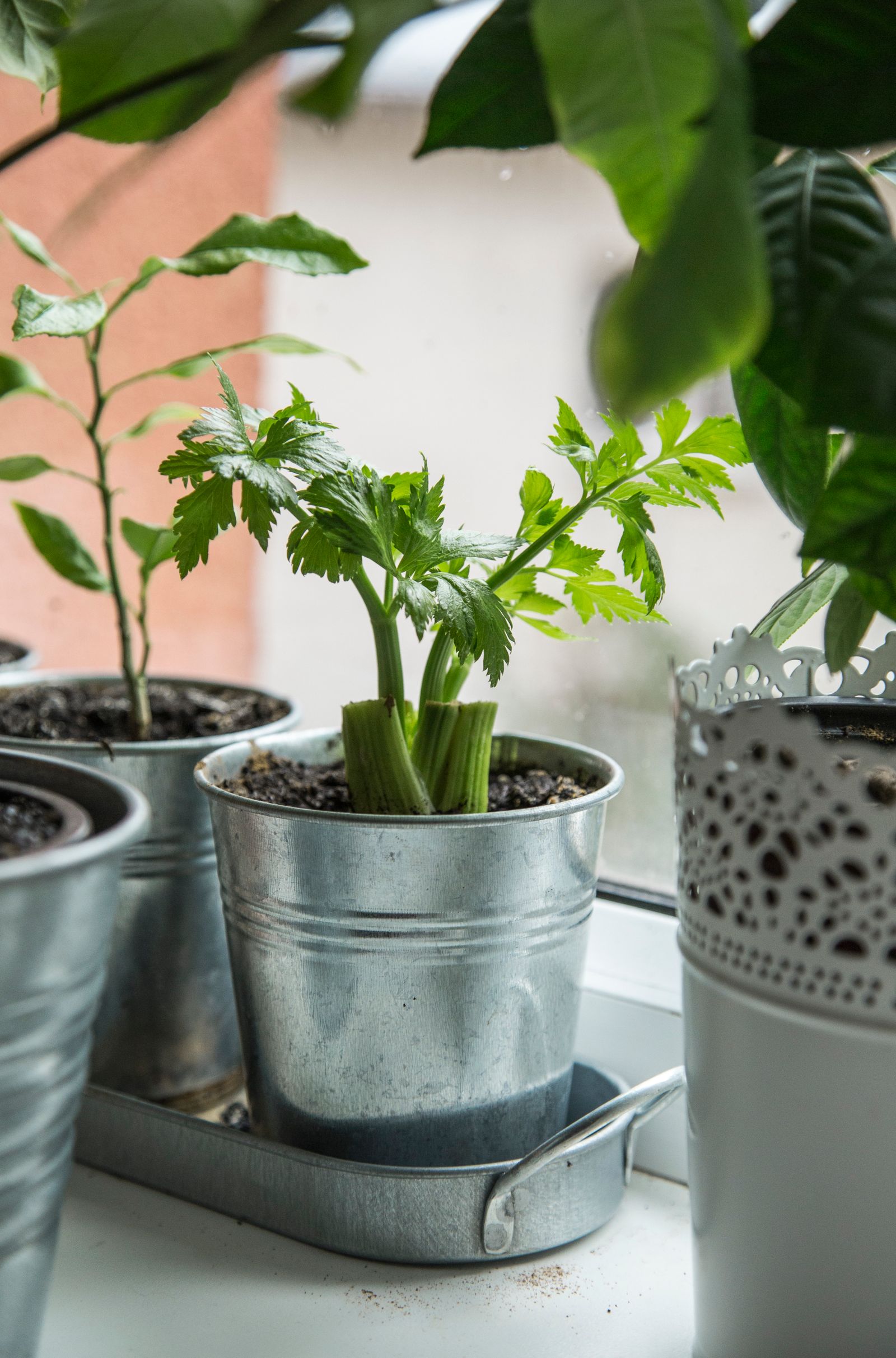
Rescue it the day you bring it home: tip it out, split the rootball into three or four clumps, and repot them in bigger pots with fresh compost. It looks brutal and it works. One supermarket pot becomes three plants that live for months.
What works on a windowsill
Mint. Almost impossible to kill, and it will take over any pot it shares. Give it its own.
Chives. Happy, tolerant, and they come back after cutting. A pot of chives is a permanent supply of the thing that finishes eggs and potatoes.
Parsley. Slow but steady. Wants more light than most and a deep pot for its taproot.
Thyme, rosemary, oregano, sage. Mediterranean, so they want the sunniest spot, gritty compost and to be allowed to dry out between waterings. They die of kindness far more often than neglect.
Basil. Wants heat and light and hates cold windowsills and wet feet. Water in the morning, at the base, never in the evening.
Coriander. The difficult one. It bolts the moment it is stressed or hot. Sow a small pot every three weeks and treat each as short-lived rather than trying to keep one alive.
Light is the whole game
Most kitchen herbs want as much direct sun as you can give: a south-facing sill is ideal, north-facing is a struggle. Leggy, pale, stretched growth means not enough light, not too little water.
In a dark northern winter, even a good sill is marginal. A cheap grow light on a timer changes what is possible, and rosemary and thyme in particular would rather be outdoors, hardy as they are.
Watering, the part everyone gets wrong
More herbs are drowned than dried. Pots need drainage holes; a decorative pot with no hole is a bucket. Water when the top few centimetres of compost feel dry, then water properly until it runs out of the bottom, and empty the saucer.
Woody Mediterranean herbs want to dry out more than soft leafy ones. Grouping herbs with similar needs in the same window makes this much easier to judge.
Harvest so the plant keeps going
Pinch from the top, above a pair of leaves, and the plant branches. Strip leaves off the bottom and it grows tall, bare and unhappy.
Never take more than about a third at once. With basil, pinch out the flower buds as they appear; once it flowers it puts its energy there and the leaves lose flavour.
Chives get cut with scissors a few centimetres above the compost and grow back. Woody herbs get snipped from the soft green tips, not the old wood.
What to do with a glut
Soft herbs freeze well blitzed with oil in an ice cube tray. Hard herbs dry well: tie a bunch and hang it somewhere airy, or spread on a tray in a very low oven. Herb stalks go in the stock bag, and parsley stalks in particular have more flavour than the leaves.
Two pots on a sill and a habit of pinching the tops is genuinely all it takes to stop buying plastic packets of herbs for one recipe at a time.