

You drain the pasta, spoon sauce over the top, and by the time it reaches the table the sauce has slid to the bottom of the bowl. The pasta is bare and the last few forkfuls are soup. This is not a recipe problem. It is a physics problem, and the fix takes thirty seconds.
Sauce has to be built onto the pasta
A sauce clings when fat and water are bound into an emulsion thick enough to coat. Pour sauce over drained pasta and you have two separate things sitting next to each other. Finish the pasta in the pan with the sauce and you have one thing.
Three ingredients do the binding: fat, starch and movement. Every classic pasta sauce uses all three.
Pasta water is the ingredient people pour away
The cloudy water left after boiling pasta is full of released starch. Those starch molecules sit between fat and water and stop them separating, which is what an emulsifier does. It carries salt too, so it seasons while it thickens.
Keep a mugful before you drain. Every time. If you forget, you will notice.
Two habits make that water work harder. Use less water than the packet suggests, so the starch is more concentrated. And salt it properly: it should taste like a well-seasoned soup, not like the sea and not like the tap.
The method
- Cook the pasta a minute or two short of the packet time. It finishes in the pan.
- Have the sauce hot in a wide pan, wider than feels necessary.
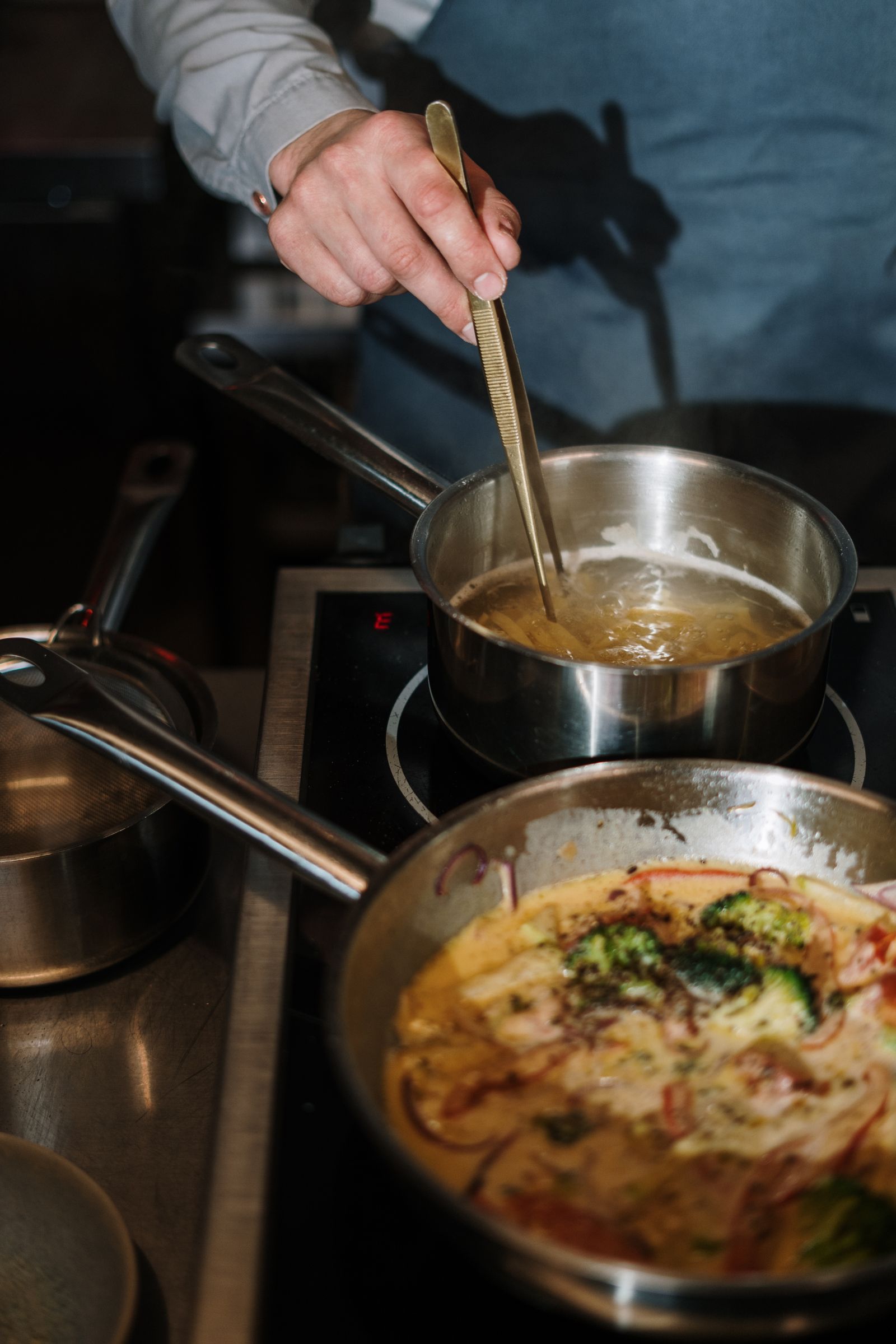
- Move the pasta straight from the water into the sauce with tongs, dripping wet. Do not drain it dry in a colander.
- Add a good splash of pasta water and turn the heat up.
- Now agitate. Toss, stir hard, shake the pan. Movement forces the fat into the starchy water and holds it there.
- Take the pan off the heat before adding cheese or butter, and keep stirring. Boiling cheese splits it.
You are waiting for the moment the sauce turns glossy and starts clinging to the pasta instead of running off it. Too loose, keep going. Too tight, another splash of water.
Four sauces, one principle
Cacio e pepe. Toast black pepper in a dry pan, add pasta water to make a shallow puddle, add the pasta, then take the pan off the heat and add pecorino a handful at a time, stirring hard. Heat is the enemy: too hot and the cheese seizes into strings.
Aglio e olio. Garlic gently in a generous amount of olive oil until it just turns gold. Pasta in, a ladle of water, then toss hard for a minute until the oil and water go cloudy and creamy. That cloudiness is the emulsion.
Tomato. Cook the sauce down further than looks sensible, then loosen it with pasta water at the end. A watery tomato sauce cannot be rescued with cream; it needed reducing first.
Carbonara. Render the pork fat, then take the pan off the heat entirely. Whisk eggs and cheese with a little hot pasta water to warm them, add to the pan and stir. Residual heat sets the sauce. Direct heat scrambles it.
The small things
- Use a wide pan. Surface area lets the sauce reduce and gives the pasta room to move. A deep pot steams instead.
- Do not rinse pasta. Rinsing washes off the starch that would have done the binding.
- Do not oil the cooking water. It coats the pasta and stops sauce sticking, which is the opposite of the goal.
- Match shape to sauce. Thin sauces want long strands; chunky sauces want tubes and shells that trap them.
- Serve immediately. Emulsions relax as they cool. This is the dish where the table waits for the food.
If it splits
Add a splash of hot pasta water and stir hard off the heat. Most broken sauces come back. Cheese that has gone stringy got too hot and there is no route back, so next time build the sauce off the heat and add the cheese in stages.