

Rice in a pot with other things is one of the oldest dinner shapes there is, and almost every cuisine has its own version. The names differ. The method barely does.
Once you can see the shape, the recipe stops mattering. You look at what is in the fridge, decide which of the three finishes you want, and cook.
The shape
- Build a base. Onion, garlic and whatever aromatic belongs to the dish, cooked slowly in fat until soft. This is where the flavour comes from, so do not rush it: eight minutes, not two.
- Toast the rice. Stir it into the fat for a minute or two until the grains look glassy at the edges. This step is what separates a pilaf from boiled rice with things in it.
- Add liquid, all at once or a ladle at a time. That choice is the whole difference between the three dishes below.
- Cook without stirring, or with constant stirring. Same choice, same reason.
- Rest, then finish. Off the heat, lid on, ten minutes. Then acid, fat and something fresh.
Three finishes
Pilaf: separate grains
Long-grain rice, rinsed until the water runs clear. Liquid in one go, roughly 1.5 times the volume of the rice. Lid on, lowest heat, fifteen minutes, then off the heat for ten more with the lid still on. Do not stir and do not lift the lid; every peek costs you steam.
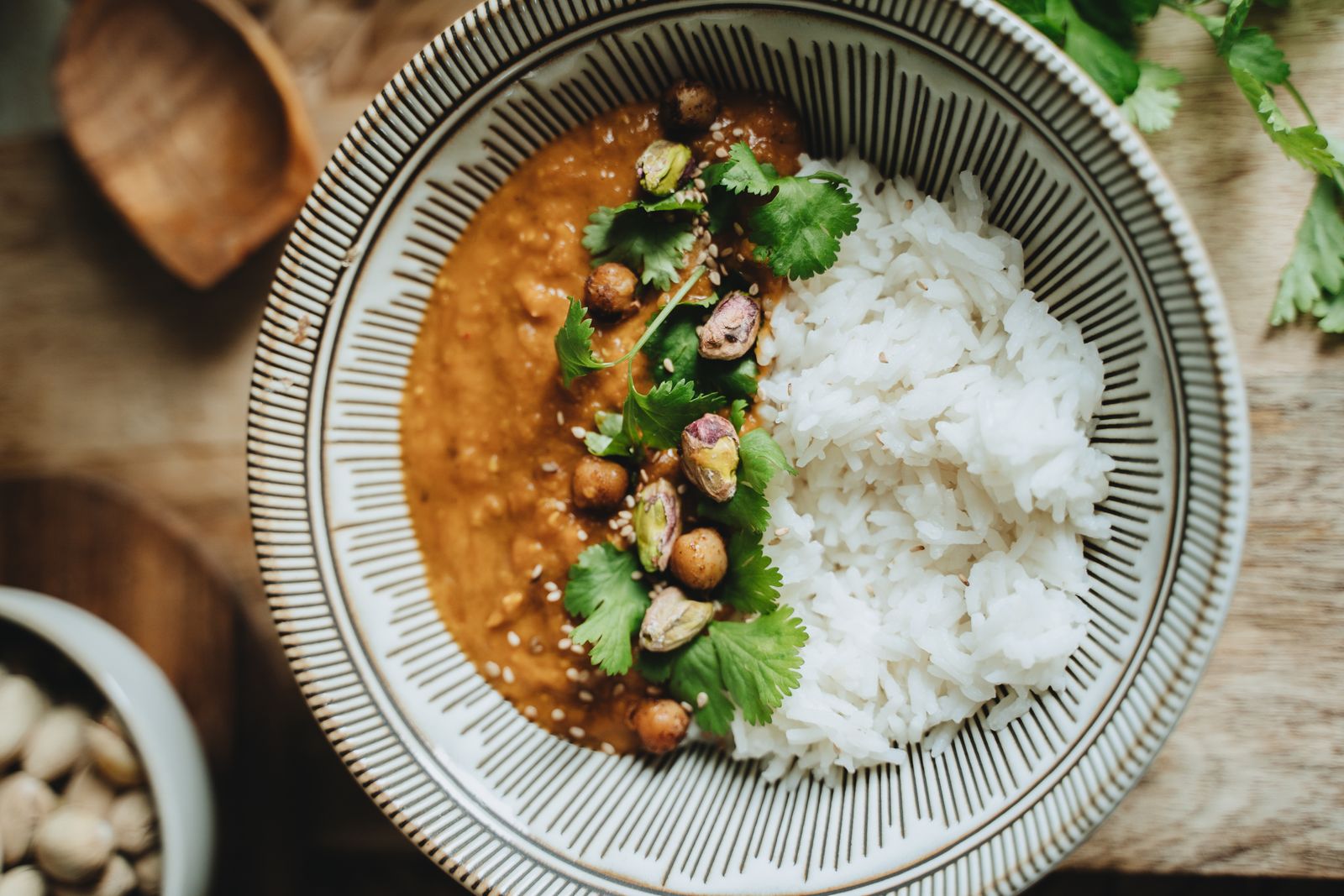
Works with: chicken thighs browned first, spiced lamb, chickpeas, squash, raisins and toasted almonds.
Risotto: creamy, loose
Short-grain rice, never rinsed, because the surface starch is what makes it creamy. Hot stock a ladle at a time, stirring often, twenty minutes or so. It is ready when a grain still has the faintest resistance in the middle and the whole thing moves like a slow wave when you shake the pan.
Finish off the heat with cold butter and hard cheese, beaten in hard. This is the step people skip and it is the step that makes it risotto.
Baked rice: the unsupervised one
The weeknight answer. Base and rice in an ovenproof pan, boiling stock over, lid or foil on tight, 180°C for 25 minutes. No stirring, no watching, no hob to keep an eye on. Roast vegetables on a second shelf while it cooks and dinner assembles itself.
The two mistakes
Stirring a pilaf, or not stirring a risotto. Stirring breaks grains and releases starch. That is a disaster in a pilaf and the entire objective in a risotto. Decide which dish you are making before the liquid goes in.
Cold liquid into hot rice. It stops the cooking, and in a risotto it makes the texture gluey. Keep your stock at a simmer in a second pan, or use boiling water from the kettle.
Ratios worth remembering
- Pilaf: 1 part rice to 1.5 parts liquid by volume, less if the vegetables are wet.
- Risotto: roughly 1 to 3, added gradually, judged by texture rather than measured.
- Baked: 1 to 2, because the oven is drier than the hob.
- Per person: 75g of dry rice for a main course, 50g if there is plenty else on the plate.
Finish it properly
Whichever version you cooked, the last thirty seconds decide whether it tastes finished or flat. Something sharp: lemon, vinegar, yoghurt, pickle. Something fresh: herbs, spring onion, a handful of rocket. Something with texture: toasted nuts, seeds, crisp onions, breadcrumbs fried in butter.
A pot of rice without those three is dinner. With them it is a dish, and it took another minute.
The leftovers are the second meal
Cooked rice goes hard in the fridge because the starch recrystallises. That is not a fault; it is exactly what fried rice wants, and a pan of day-old rice fries far better than fresh. Spread it out to cool quickly, refrigerate within an hour, use it within a day, and reheat it properly until steaming all the way through.
Risotto leftovers have their own destination. Chilled overnight, rolled into balls around a cube of cheese, crumbed and fried, they become arancini, which is the only dish on this page worth deliberately cooking too much of.