

Spice flavour lives in oils that are not water-soluble. Stir turmeric into a simmering pot and you get colour and a dusty edge. Fry it in hot fat for thirty seconds first and you get the flavour the recipe was promising. That is blooming, and it is the technique that separates the two versions of the same dish.
Whole spices go in first
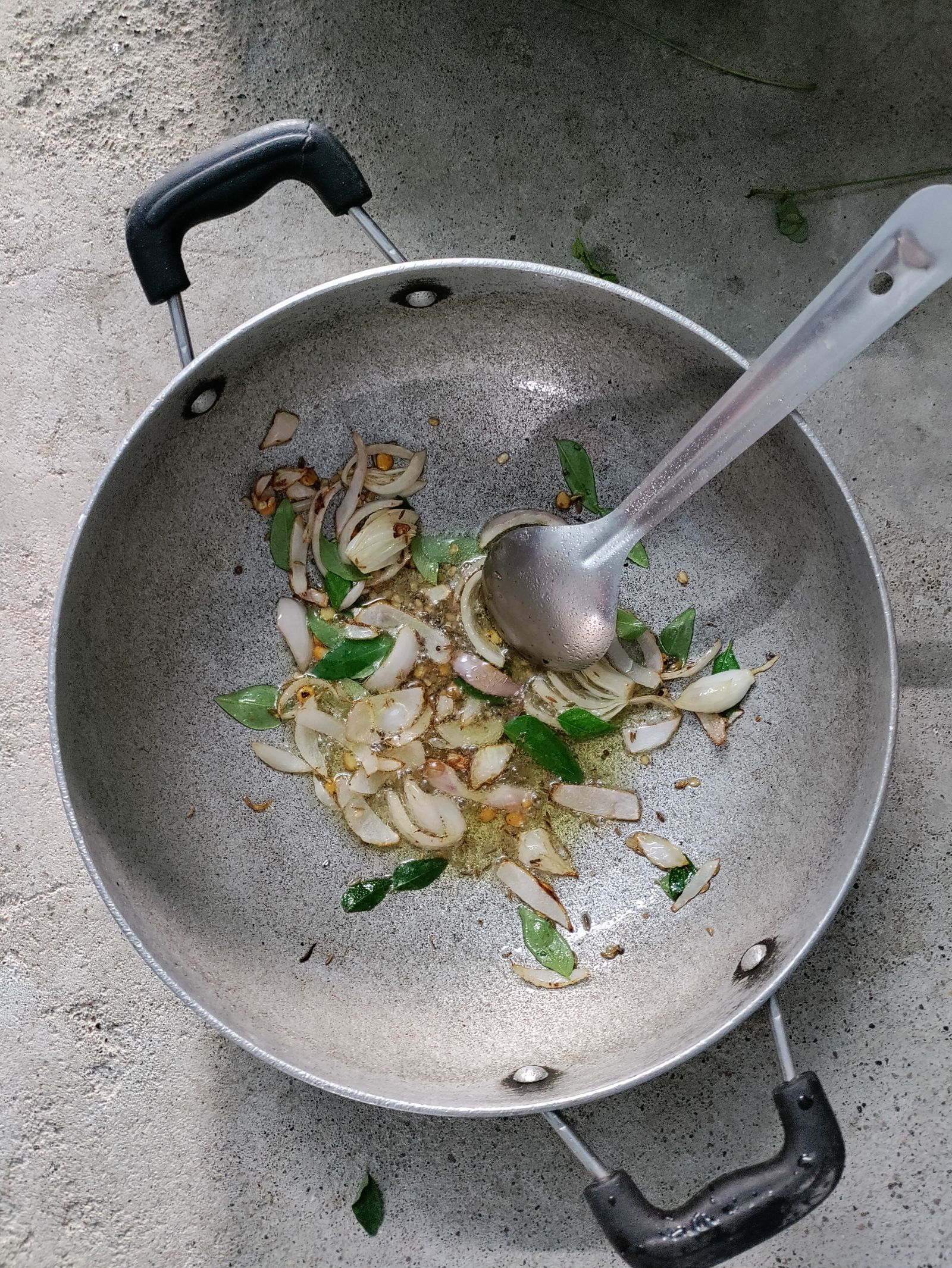
Heat neutral oil or ghee in the pan, then add whole spices: cumin seeds, mustard seeds, coriander seeds, cardamom pods, a cinnamon stick, dried chillies, curry leaves.
You are listening more than looking. Cumin sizzles and darkens slightly. Mustard seeds pop and jump, which is the signal they are done. Curry leaves crackle hard for a few seconds. The whole stage takes thirty to sixty seconds, and it goes from perfect to burnt fast, so have the next ingredient ready beside the hob.
Burnt spices are bitter through the whole dish and cannot be fixed. If it happens, wipe the pan and start again; it costs two minutes and saves dinner.
Then the aromatics
Onion next, cooked properly. Most home curries are underdone at this stage. Deep golden onion, ten to fifteen minutes on medium, is where a lot of the sweetness and body comes from.
Ginger and garlic go in after the onion has coloured, because they burn faster. A minute is enough.
Ground spices need fat and very little time
Turmeric, chilli, coriander, garam masala: these go in after the aromatics, into the fat, for twenty to thirty seconds with the pan moving. They burn quicker than whole spices because the surface area is enormous.
The trick that saves them: add a splash of water, or the tomatoes, the moment they smell fragrant. That drops the pan temperature immediately and stops the cooking exactly where you want it.
Garam masala is the exception to the exception. It is a finishing blend, and much of its aroma is volatile, so a pinch at the end as well as during cooking gives the best of both.
Tadka: blooming at the end
The same technique, used as a finish. Heat a few spoons of ghee or oil in a small pan, fry whole spices, garlic slices, dried chilli or curry leaves until they crackle, then pour the whole sizzling lot over a finished dal, soup or plate of yoghurt.
It takes ninety seconds and it makes a plain pot of lentils taste like it was cooked by someone who knew what they were doing. If you only adopt one idea from this piece, adopt this one.
The order, in short
- Fat, hot but not smoking.
- Whole spices, until they pop and smell.
- Onion, until properly golden.
- Ginger and garlic, one minute.
- Ground spices, thirty seconds, then liquid to stop them.
- Main ingredients, then simmer.
- Garam masala, acid and fresh herbs at the end. Tadka over the top if you like.
Buying and keeping spices
Whole spices keep their aroma far longer than ground, and a cheap coffee grinder kept only for spices pays for itself quickly. Buy from a shop with turnover rather than a supermarket rack that has been under lights for a year, and buy smaller amounts more often.
Store them away from heat and light, which means not on the shelf above the hob, however convenient that is. If a spice smells of nothing when you open the jar, it will taste of nothing in the pan.
One dish to practise on
Tarka dal. Simmer red lentils with water, turmeric and salt until they collapse. Separately, bloom cumin seeds in ghee, add sliced garlic until golden, then chilli powder off the heat. Pour it over the lentils, finish with lemon and coriander. Twenty-five minutes, almost no shopping, and the technique on full display.