



Sourdough attracts more ceremony than any other bake. Strip it back and it is four ingredients and one skill: reading dough. Nothing here needs a special oven, a proofing box or a named starter with a birthday.
The starter
A starter is flour and water left to collect the yeasts and bacteria already present in the flour and the air. Mix equal weights of wholemeal flour and lukewarm water in a jar, cover loosely, and leave it at room temperature. Each day, throw most of it away and feed what is left with fresh flour and water in equal weight.
For the first few days it may smell sharp or do nothing. That is normal. You are ready when it reliably doubles within four to eight hours of a feed and smells like yoghurt rather than nail polish. That usually takes one to two weeks, longer in a cold kitchen.
The discard is not waste. Keep it in the fridge for pancakes, crackers or flatbread.
The loaf
For one loaf: 500g strong white flour, 350g water, 100g active starter, 10g salt. That is 70% hydration, which is wet enough for an open crumb and dry enough to handle.
Mix
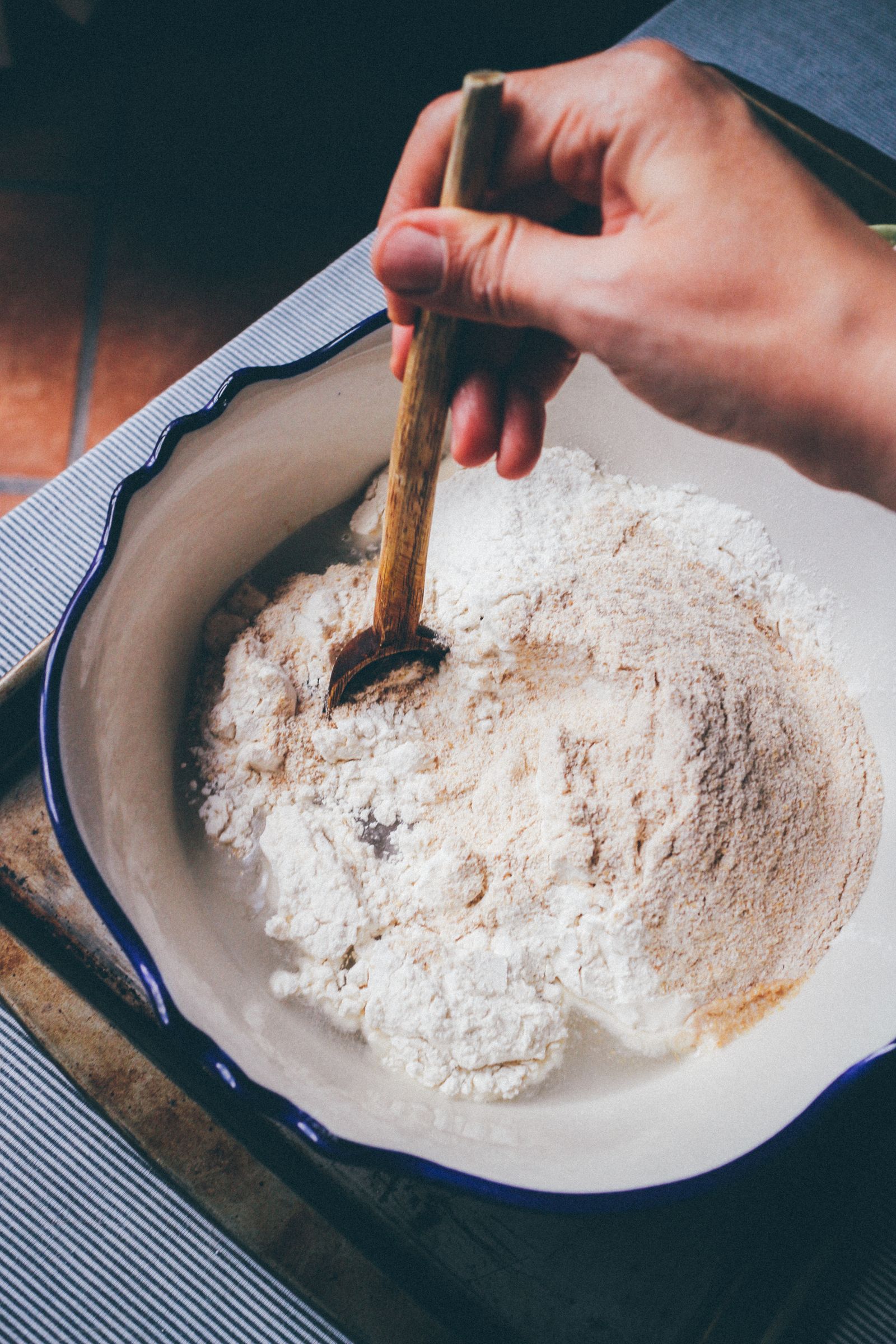
Combine flour and water only, and leave it for half an hour. This rest lets the flour hydrate and starts gluten forming without any work from you. Then add the starter and salt and squeeze everything together until the dough is uniform.
Folds instead of kneading
Over the next two to three hours, fold the dough four times, roughly every forty-five minutes. Wet your hand, reach under one side, stretch it up and fold it over the top, then turn the bowl and repeat on all four sides. The dough starts slack and sticky and ends smooth and springy.
The first rise
This is where clocks lie. The dough is ready when it has risen by about half, feels alive and domed, and holds a shallow dent when you poke it. In a warm kitchen that might be four hours; in a cold one, eight. Watch the dough, not the timer.
Shaping
Tip it onto a lightly floured surface. Fold the edges into the middle to build tension, flip it seam-side down, and drag it towards you a few times so the surface tightens. Rest twenty minutes, shape once more, then place seam-side up in a bowl lined with a floured tea towel.
The cold rest
Into the fridge overnight, eight to sixteen hours. This is the step that makes sourdough fit a normal life: it develops flavour, firms up the dough so it scores cleanly, and means you bake in the morning instead of at midnight.
Bake
Put a cast iron pot with its lid in the oven and heat to 250°C. Tip the cold dough onto baking paper, score it decisively about one centimetre deep with a blade, lower it into the hot pot and cover. Twenty minutes with the lid on, then remove the lid, drop to 220°C and bake for another twenty to twenty-five minutes until deep brown.
The lid traps steam, which keeps the crust soft long enough for the loaf to expand. Without steam, the crust sets early and the bread stays dense.
Wait before cutting
An hour at least. The crumb is still setting as it cools, and a hot loaf cut early goes gummy. It is the hardest instruction in baking and the one that changes the result most.
When it goes wrong
- Flat and dense. Usually an underpowered starter or an underproved dough. Feed the starter twice before baking day and give the first rise longer.
- Gummy inside. Cut too early, or underbaked. Bake five minutes longer; a dark crust is not a burnt crust.
- Sticky, unmanageable dough. Wet hands beat more flour. Extra flour at the shaping stage tightens the crumb.
- Sour and sharp. Fermented too long or too warm. Shorten the first rise or move the dough somewhere cooler.
The first loaf is rarely the good one. The fourth usually is, because by then you have stopped following instructions and started reading the dough.