

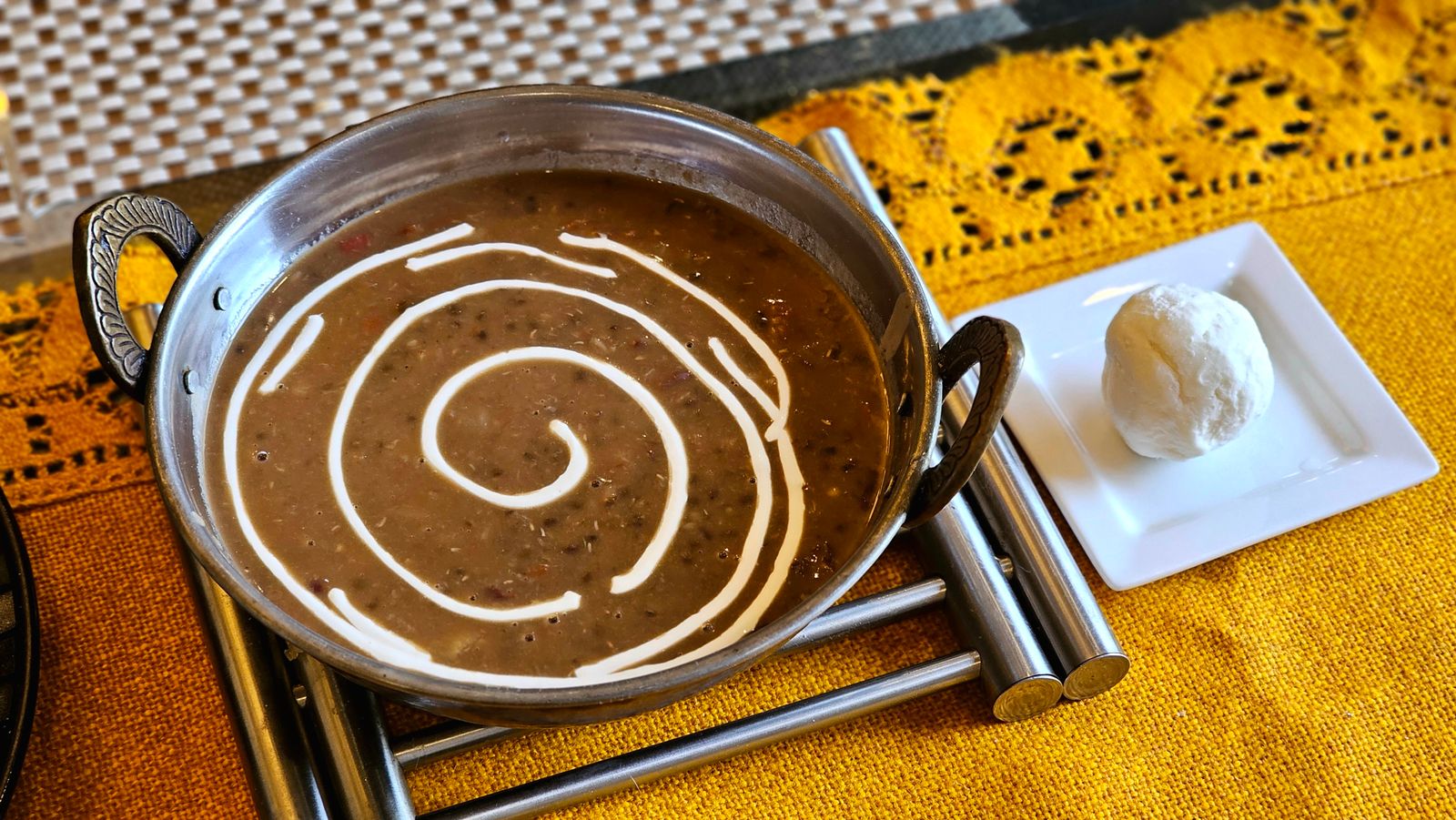
There is no single dish called dal. The word covers the pulse itself and a whole family of dishes built from it, and every household has its own. What they share is a structure that, once you see it, you can cook without a recipe for the rest of your life.
The two parts
Part one: the lentils. Pulse, water, turmeric, salt, simmered until soft. That is all. Turmeric is not decoration here; it is doing something to the flavour and the colour of the base.
Part two: the tarka. Fat heated in a small pan, whole spices bloomed in it until they pop and smell, aromatics fried, and the whole sizzling lot poured over the cooked lentils at the last moment. In English this is called tempering, and it is the single technique that separates dal from lentil soup.
The lentils are quiet. The tarka is loud. You need both.
The base
For four people: 250g of split red lentils (masoor dal) or split yellow mung (moong dal), rinsed until the water runs clear. A litre of water, half a teaspoon of turmeric, a good teaspoon of salt.
Simmer, skim the foam that rises in the first few minutes, and cook until it collapses into a loose purée. Red lentils take about twenty minutes; split mung nearer thirty. Chana dal and whole pulses take far longer and want a pressure cooker.
Judge the consistency by what you are eating it with. Loose and pourable to go over rice; thicker to scoop with flatbread. It thickens as it stands, so keep a kettle of hot water nearby.
The tarka
In a small frying pan, heat three generous tablespoons of ghee, coconut oil or a neutral oil. Then, in this order:
- Whole spices first. A teaspoon of cumin seed, maybe black mustard seed, a dried chilli, a pinch of asafoetida if you have it. They need hot fat and about thirty seconds. Mustard seeds tell you they are ready by jumping; cumin by darkening and smelling toasted rather than raw.
- Then the aromatics. Sliced garlic, ginger, sliced onion or shallot. Fry until the garlic is properly golden, not blond. This takes a couple of minutes and is where the sweetness comes from.
- Ground spices last, off the heat or on very low. Chilli powder, garam masala, coriander. They burn in seconds, and burnt ground spice is bitter all the way through the dish.
Pour the whole pan over the dal. It should hiss. Stir most of it in and leave some sitting on top.
Four variations from the same pot
Tarka dal. The version above, as it stands. Rice, yoghurt, a lime wedge.
Tomato dal. Cook a chopped tomato into the tarka until it breaks down. Sharper, and the one that goes best with a fried egg on top.
Coconut dal. Replace a third of the water with coconut milk, added in the last five minutes so it does not split. Curry leaves and mustard seed in the tarka. Rounder and milder.
Spinach dal. Stir two big handfuls of spinach through the hot lentils until just wilted. More green than you expect it to take, and it makes the dish a whole dinner rather than a side.
The finish
Dal almost always wants acid at the end, and almost every recipe forgets to say so. Lemon or lime juice, stirred in off the heat, is what lifts it from heavy to bright. Taste, then add more salt than feels polite: lentils absorb a lot.
Fresh coriander if you like it, sliced raw onion or a quick pickled red onion for bite, yoghurt for coolness. Rice, or flatbread, or a heap of both.
Why it earns its place
A pot of dal costs very little, keeps four days in the fridge, freezes well, reheats without complaint and provides genuinely useful amounts of protein and fibre. Make the lentil base on Sunday and a fresh tarka each time you reheat it: two minutes of work and it tastes newly cooked rather than warmed up.