

Most small food businesses price by looking at what the place down the road charges. That tells you what the market will bear, which is useful, and nothing at all about whether the dish makes money, which is the other half of the question.
Costing properly takes about twenty minutes per dish. You do it once, then revisit when prices move.
Build the cost card
Write down every single thing that goes on the plate, in grams or millilitres, at the quantity you actually serve. Every single thing means the cooking oil, the salt, the butter finishing the sauce, the herb on top, the lemon wedge and the paper the burger sits in.
Then convert each purchase price to a unit price: a 5kg bag at a known price becomes a price per gram. Multiply by the portion quantity. Add it up. That is your raw ingredient cost, and it is the number almost everyone stops at.
Yield is where the money disappears
You do not cook what you buy. You cook what survives trimming, peeling, boning and cooking, and you paid for the rest.
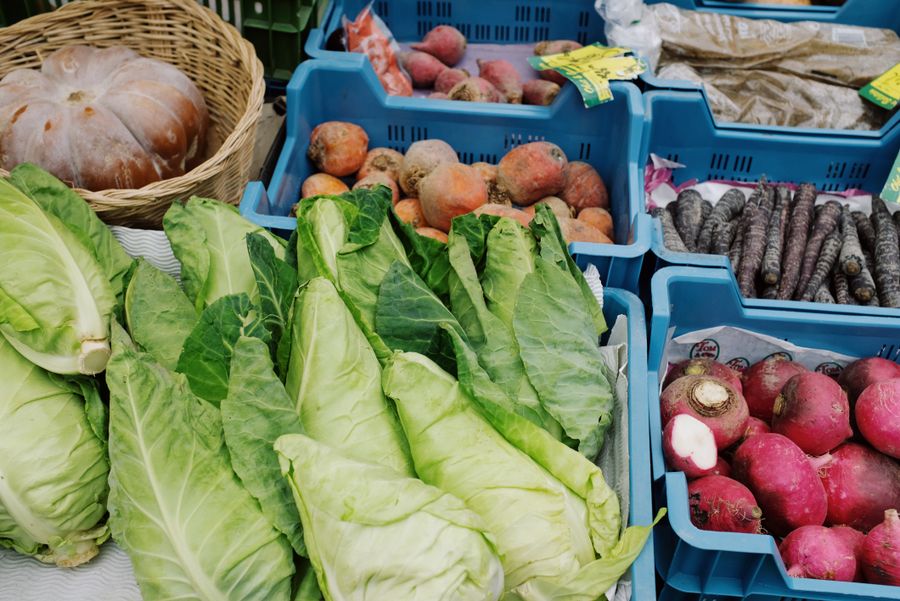
Work out a yield factor for anything you break down: usable weight divided by purchased weight. If a kilo of vegetable trims down to 700g, the yield is 0.7, and a usable kilo costs the purchase price divided by 0.7, about 1.43 times what the invoice said. A dish using 200g of trimmed vegetable is costed on that higher number, not on the shelf price.
Do the same for cooking loss where it matters. Roasting meat loses a substantial share of its weight, so a portion described by cooked weight has to be costed on raw weight. Weigh it once, write the factor on the card, reuse it forever.
Portion cost, then cash
With yields applied you have a portion cost. Now two numbers matter.
Gross profit in cash is the selling price excluding VAT, minus the portion cost. That is the money the dish actually contributes.
Food cost percentage is portion cost divided by selling price excluding VAT. Plenty of operations aim somewhere between a quarter and a third, but that is a rule of thumb from a different era of energy and labour prices, not a law.
The percentage is a check, not a target. A dish at 22% with a low price can contribute less cash per plate than a dish at 38% that sells for considerably more. You bank cash, not percentages. Use the percentage to spot outliers, and the cash margin to make decisions.
What the percentage leaves out
Food cost is one line. Before a dish is genuinely profitable it also has to carry:
- Labour, including prep the customer never sees. A dish with three hours of prep and a low ingredient cost may be the most expensive item on your menu.
- Waste and spoilage. Add a realistic figure rather than pretending it is zero, especially for anything fresh with a short life.
- Energy. An eight-hour braise has a cost that appears on no invoice line for the meat.
- Staff meals, comps, mistakes and returns.
- Delivery platform commission and card fees, which can be large enough to turn a dish that works in-house into a loss online. Cost those channels separately.
Re-cost when the world moves
Set a reminder to recheck your five best sellers quarterly, and any time a key ingredient jumps. A menu costed two years ago is a work of fiction. Keep the cards in a spreadsheet where purchase prices live in one place and dishes reference them, so a single update flows through everything.
Then look at the menu as a whole
Plot each dish on two axes: how often it sells, and how much cash it contributes. Four groups fall out.
- Popular and profitable. Protect these. Consistent, prominent on the menu, never quietly changed.
- Popular, thin margin. Trim the cost, adjust the portion, or nudge the price. Small moves, because people notice these dishes.
- Profitable, rarely ordered. Usually a naming, description or placement problem rather than a food problem. Move it before you cut it.
- Neither. Off the menu. It is occupying a fridge shelf and a line on the page.
Two habits that keep it honest
Weigh portions during service for a week. The gap between the portion you costed and the portion you serve is usually where the margin went.
And price the dish you cook, not the dish you wish you sold. If the number the arithmetic gives you is higher than the market will pay, that is real information: change the dish, change the portion, or leave it off. Selling it at a loss because it feels right is the expensive option.