

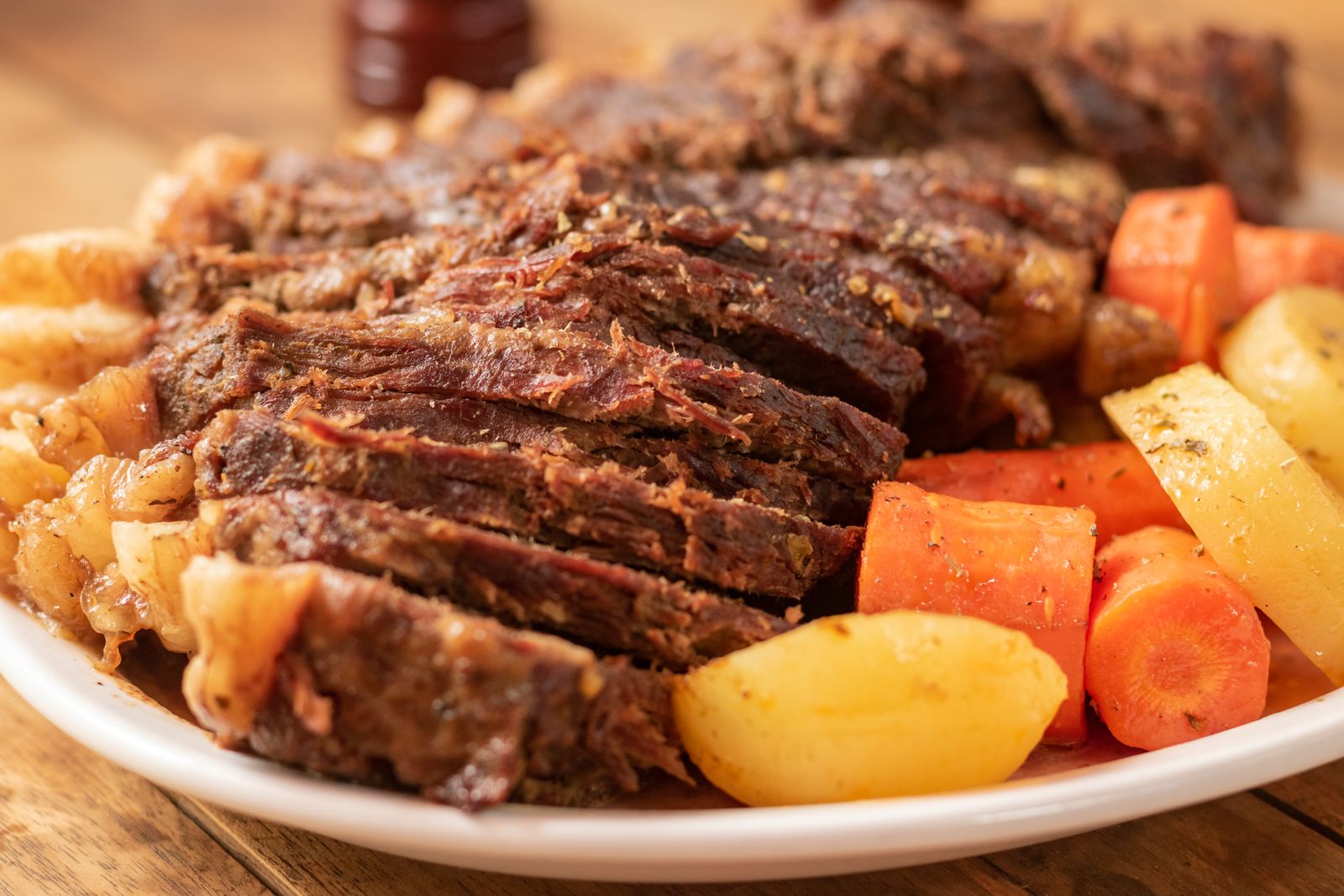
The cuts that come from the hardest-working parts of an animal are the cheapest, the most flavourful, and completely inedible if you treat them like a steak. Shin, cheek, shoulder, neck, oxtail: these are the braising cuts, and braising is the one technique that unlocks them.
What is actually happening
Hard-working muscle is laced with connective tissue, mostly collagen. Collagen is tough and chewy, but held at a low temperature in the presence of moisture for long enough, it breaks down into gelatine. That gelatine is what makes a good braise feel rich in the mouth and what sets the sauce to a glossy coat rather than a watery pool.
The muscle fibres themselves squeeze out moisture and go dry along the way. That is normal and it is why a braise that tastes stringy at two hours can taste perfect at four: you have to push past the dry stage until enough gelatine is released to make up for it.
The method, in order
- Dry the meat and salt it. An hour ahead if you can, overnight if you are organised. Wet meat steams instead of browning.
- Brown it hard, in batches. A crowded pan is the difference between a braise that tastes of something and one that tastes of stock. Take your time here; this is where most of the flavour is made.
- Soften the vegetables in the same fat. Onion, carrot, celery, or whatever the dish wants.
- Deglaze. Wine, beer, cider, stock, vinegar. Scrape everything stuck to the base back into the liquid.
- Liquid to halfway, not to cover. A braise is not a boil. The part above the liquid roasts and concentrates; the part below simmers. Cover the lot and you have made soup.
- Lid on, oven on low. 140 to 150°C, or the barest tremble on the hob. Two to four hours depending on the cut.
The temperature is the whole game
If the liquid boils, the muscle fibres tighten and tear and the meat goes stringy no matter how long you cook it. You want the occasional lazy bubble, nothing more. The oven is easier than the hob for this because the heat comes from all sides and does not need watching.
Done is not a time. It is when a fork twists out of the meat with no resistance. If it fights you, it is not finished, and another forty minutes almost always fixes it.
Cuts worth asking for
- Beef shin. The best value in the shop. Enormous flavour, a huge amount of collagen, and it makes its own sauce.
- Beef cheek. Silky and quick by braising standards, around three hours.
- Pork shoulder. Forgiving and cheap, good with cider, fennel seed and a lot of onions.
- Lamb neck. Sweet, fatty, ideal with pulses and spice.
- Oxtail. The most gelatine of any cut and the most work to eat. Worth both.
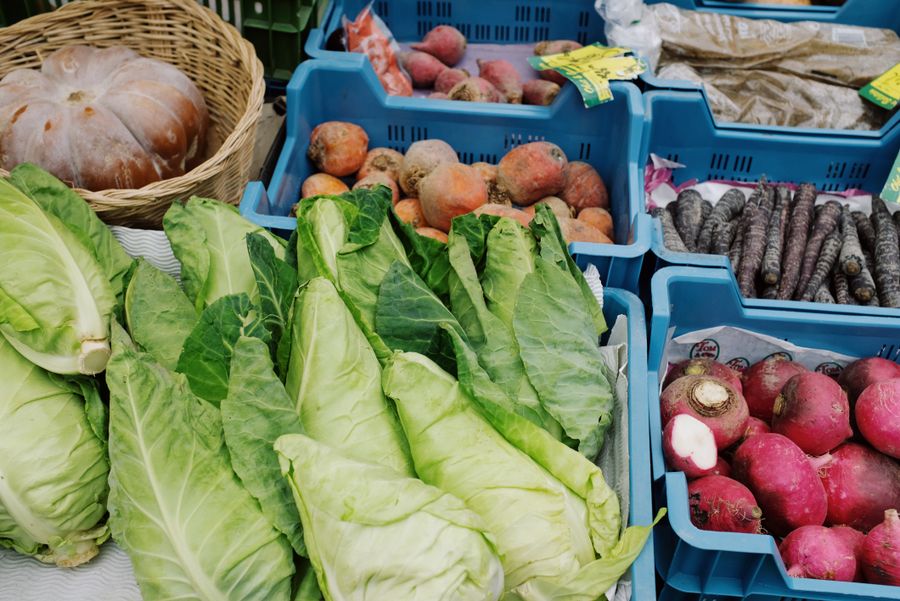
The same technique works without meat. Whole heads of chicory, wedges of cabbage, celeriac, fennel or a tin of chickpeas all braise beautifully in stock and fat. They need an hour rather than four, and they want a sharper finish.
Cool it down and eat it tomorrow
A braise is genuinely better on the second day. The flavours settle, the fat sets on top where you can lift it off in a sheet, and the sauce firms up. Cook it the day before you want it and you have also removed all the work from the day itself.
Reheat gently, covered, in the oven. Never at a rolling boil, for the same reason you did not let it boil the first time.
Finish it, always
Hours of slow cooking make everything deep and round and slightly monotonous. The fix takes a minute: vinegar or lemon stirred in at the end, plus something raw on top. Parsley and lemon zest, chopped together. Pickled onion. Horseradish. Gremolata. Whatever it is, it should be sharp, and it should go on after the pot leaves the heat.