


Home coffee advice usually starts with equipment, which is the wrong end. Most disappointing cups come from three things, and only one of them costs real money.
1. Grind
Grind size decides how fast water pulls flavour out of coffee. Too coarse and water rushes through, taking only the sour, thin compounds. Too fine and it lingers, dragging out the bitter ones.
Two things follow from that. First, pre-ground coffee is ground for one method, probably not yours, and it goes stale within days because the surface area is enormous. Second, a burr grinder does more for your coffee than any brewer upgrade. Blade grinders chop unevenly, producing dust and boulders that over- and under-extract in the same cup.
Rough guidance: espresso is powder-fine, moka pot slightly coarser, filter and pour-over like coarse sand, French press like breadcrumbs, cold brew coarser still.
2. Ratio
Coffee is a ratio, not a scoop. Around 60g of coffee per litre of water is a sensible starting point for filter methods, which is roughly 1:16 by weight. Espresso runs far more concentrated, around 1:2.
Weigh both. A kitchen scale is the cheapest upgrade available and the one that makes yesterday's good cup repeatable today. Beans vary in density enough that a scoop is not a fixed amount.
Once the ratio is consistent, you can change one thing at a time and know what caused the difference.
3. Water
A cup of coffee is about 98% water, so the water matters. Very soft water gives flat, hollow coffee. Very hard water mutes acidity, tastes chalky and, more expensively, furs up your machine.
If your tap water tastes fine to drink, it is probably fine to brew with. If it is heavily chlorinated, a simple filter jug is enough. Distilled water is not the answer; coffee needs some mineral content to extract properly.
Temperature matters too: just off the boil, around 92-96°C. Boiling water scalds the grounds and pushes bitterness. If you have no thermometer, boil and wait thirty seconds.
Reading a bad cup
- Sour, sharp, thin, salty. Under-extracted. Grind finer, brew longer, or use hotter water.
- Bitter, dry, harsh finish. Over-extracted. Grind coarser, brew shorter, or drop the temperature slightly.
- Weak but not sour. The ratio is off; use more coffee rather than changing the grind.
- Flat and dull. Stale beans, or water with almost nothing in it.
Change one variable at a time. Change two and you learn nothing.
Beans
Buy whole beans with a roast date on the bag, not a best-before date two years out. Coffee is best from about five days to five weeks after roasting. Store the bag sealed, at room temperature, away from light. The freezer works for long storage in properly airtight portions; the fridge does not, because coffee absorbs smells and picks up condensation.
A method that is hard to get wrong
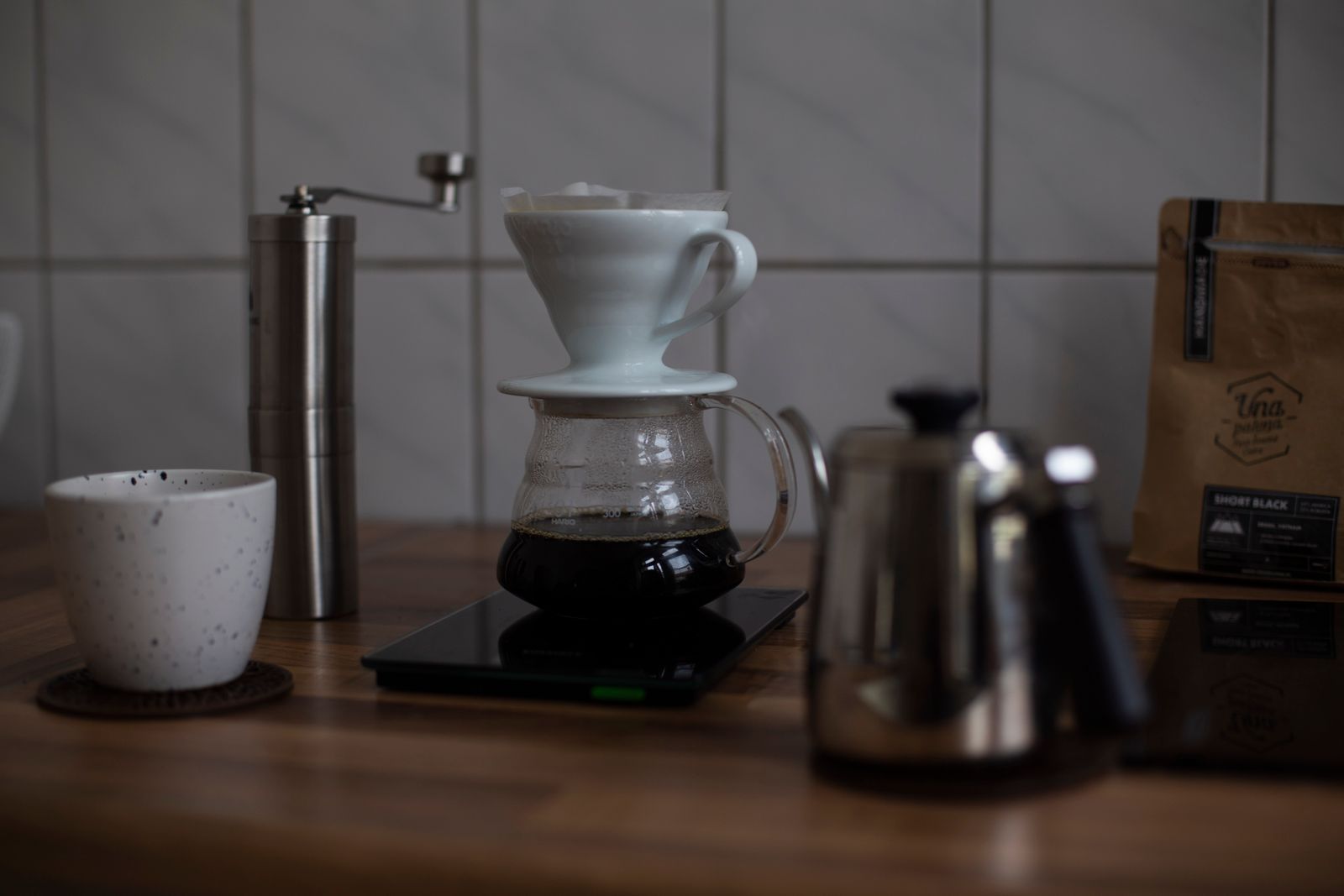
For a single mug in a pour-over: 18g coffee ground like coarse sand, 300g water just off the boil. Rinse the paper filter with hot water and discard it, which removes the papery taste and warms the vessel. Add the coffee, pour 50g of water and wait thirty seconds while it bubbles, then pour the rest in slow circles. The whole thing should take about three minutes. If it drains in ninety seconds, grind finer. If it stalls past four minutes, grind coarser.
What to buy, in order
A scale first, then a burr grinder, then fresh beans from somewhere that roasts them. After that, spend on a brewer if you want to. The order matters: a cheap brewer with fresh, well-ground coffee beats an expensive machine fed stale pre-ground supermarket beans, every time.